Normally, We are publishing one round up post a month, but here I’m increasing the frequency of our open-source roundups. Starting now, I’ll publish two posts a month covering new AI and healthcare tools. This lets us share findings faster as the landscape shifts.
I’ve been testing a wave of new open-source tools that change how we run AI agents. Instead of isolated chats, these projects focus on squads, shared memory, and actual oversight.
Here is a look at the best options for orchestrating multiple agents, improving coding workflows, and monitoring resource usage, all without the cloud dependency.
Multi-Agent Orchestration / Squad Memory
1- Sno Station: Agents Assemble
Sno Station is a free open-source local workstation that puts Codex, Claude Code, Cursor, Hermes, OpenClaw into one squad with encrypted shared memory. Sno Station handles quota-exhaustion handoffs, cross-agent peer review, and a nightly REM pass that learns from sessions.
Let’s say, Sno Station unifies OpenAI Codex, Claude Code, Cursor, Hermes, and OpenClaw into a local squad with encrypted shared memory. It handles automatic handoffs when agents hit rate limits, enables cross-agent peer review, and runs a nightly “REM” process to learn from sessions and propose skill improvements. The tool is fully local, requires no account or server, and installs via a single terminal command.
2- Agent Kanban
Agent Kanban treats AI agents as first-class actors on a visual board. It moves beyond simple chat windows by enforcing strict ownership, dependency tracking, and verified execution logs. Humans stay in control through mandatory review gates where someone other than the agent must approve work.
The system streams live task activity and integrates directly with GitHub repositories. Built on Cloudflare Workers, it offers a transparent control plane for coordinating durable, multi-repository work without losing oversight.
3- Ouroboros Agent OS
This is an open-source self-hosted self-evolving Agent Operating System, agents spawn agents, manage lifecycle, persist memory.
Ouroboros turns chaotic AI coding into a structured, replayable operating system. It replaces ad-hoc prompting with a strict “spec-first” workflow: interview, crystallize, execute, and evaluate. The stack combines a terminal shell (ourocode) for unified control, domain plugins for specific tasks like PR reviews, and a core kernel that logs every action as an auditable event. Whether you use Claude, Codex, or Gemini, Ouroboros ensures consistent, policy-bound execution across any model.
I have been using it for sometime and one word for it “amazing”.
4- octo-agent
octo-agent is a single, MIT-licensed Go binary that runs anywhere—no Node, Python, or Ruby required. It delivers a full coding agent experience out of the box with built-in shell access, file editing, and MCP support. You keep total control: data stays local, telemetry is zero, and you choose any compatible model. From TUI to mobile, it works across eight entry points with safe defaults that prevent rogue edits. If you want a lightweight, self-hosted alternative to heavy frameworks, this is it.
Coding Agents / Harnesses
1- Reasonix
Reasonix is a DeepSeek-native coding agent built as a single Go binary (MIT). Cache-first loop optimized for long autonomous tasks, per-move checkpoint outside Git, works via terminal, desktop, browser, editor ACP.
2- Gentle Shell
Gentle Shell is an open-source free Pi-native workspace for AI-assisted development. Turns a Pi session into a workspace you lead with diff views, sub-agents, permission modes, and Gentle AI discipline layer built-in.
3- Empryo
Empryo is an AI coding agent that edits symbols, not strings. Reads repo as a live ranked dependency graph (genome) and edits through AST. Runs as desktop / terminal / headless.
4- Agent Lightning
Agent Lighting is an open-source Microsoft framework to train AI agents with RL, lighting-fast loop for improving agent capabilities. Yes it was hard for me as well that Microsoft can contribute to the open-source community until of late.
Dev Tools / Monitoring
1- abtop
abtop is like btop, but for your AI coding agents. TUI dashboard showing every Claude Code / Codex / OpenCode session: token usage, context window %, rate limits, child processes, open ports. Read-only, zero instrumentation.
4 Reasons Why:
- Running 3+ agents across projects? See them all in one screen.
- Hitting rate limits? Watch your quota in real-time.
- Agent spawned a server and forgot to kill it? Orphan port detection.
- Context window filling up? Per-session % bars with warnings.
I have been using this for few weeks, and it really helps me keep up with my agent limits. The best thing is, it is real-time.
2- OMP (oh-my-pi)
This open-source package is an enhancement pack / dotfiles for Pi agent, themes, widgets, workflow improvements.
But first what is a Pi Agent?
Pi Agent is a local-first AI assistant designed for privacy and control. It runs entirely on your machine, handling coding tasks, file management, and automation without sending data to the cloud. It focuses on being a lightweight, secure workspace that you lead, offering diff views and permission modes for safe development.
OMP, makes your life easier with it.
3- rod-cli
rod-cli is a lightweight Go binary that gives AI agents native web browsing and scraping capabilities. It replaces heavy Node.js setups with a fast, stealth-enabled tool driven by simple command-line calls. A background daemon keeps browser state alive between tasks, while compact accessibility snapshots strip DOM noise to save token limits.
Claude / Skills Ecosystem
1- Claude Code Skills & Plugins
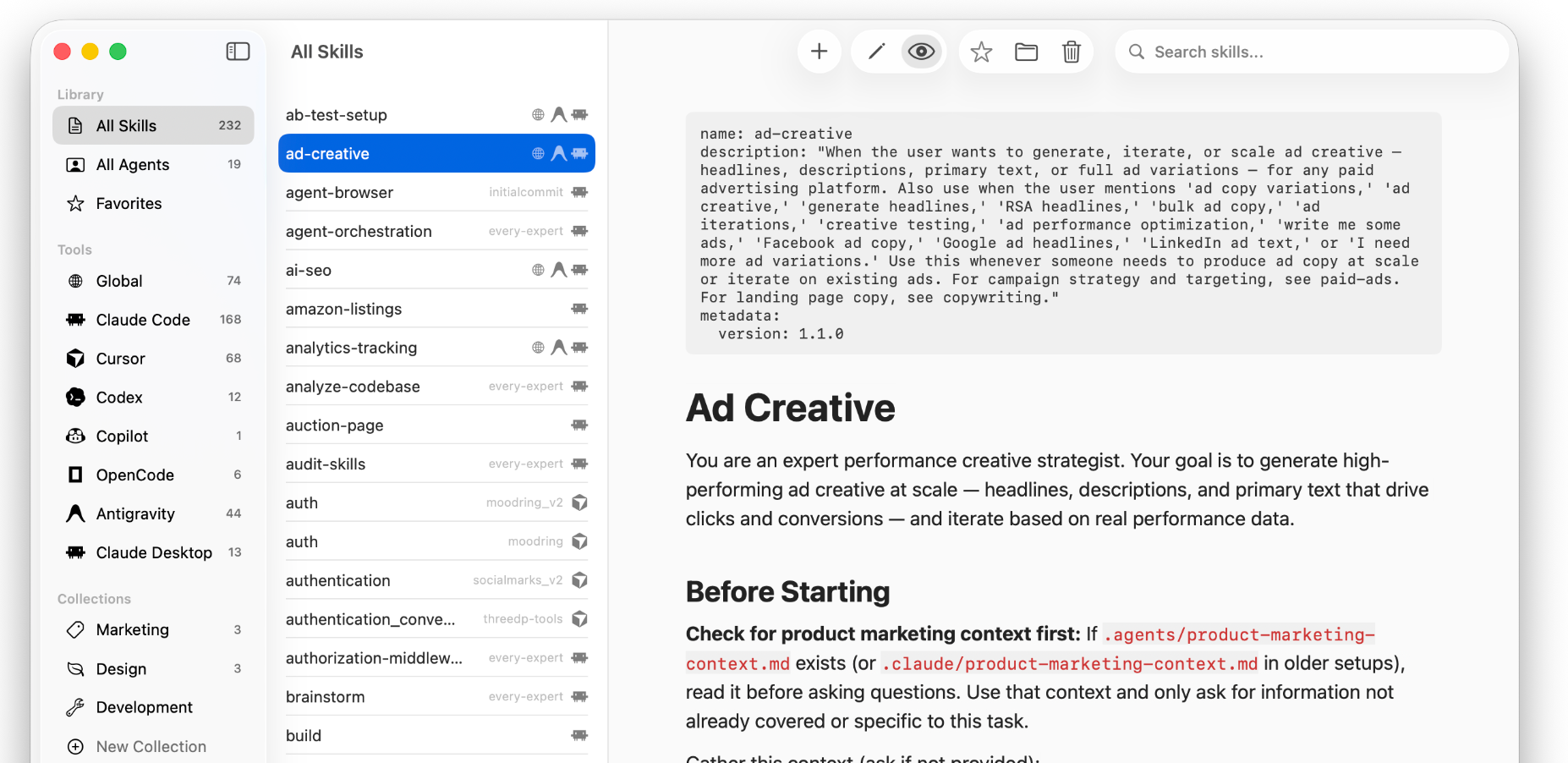
Curated collection of Agent Skills for every coding tool, drop-in skills for Claude Code, Cursor, Codex.
2- Claude Code Single-Binary Executables
This project packs Claude Code + dependencies into one portable executable, no Node / npm needed, runs anywhere.
Collaboration / Other
1- NectarLink
This is a simple P2P link / tunnel for agents to collaborate across machines, share context securely.
2- ArtCraft
ArtCraft is a free Creative platform for crafting AI art / assets.