We were sitting in a cramped café, the kind where the espresso machine screams louder than the our code conversation. Three friends, three apps, one shared delusion.
Ahmet showed us his fitness tracker first. “Look,” he said, tapping his phone. “I just told the AI, ‘Make it addictive like TikTok but for squats.’ It built the whole engagement loop in an afternoon. Gamification, streaks, social pressure. It’s beautiful.”
Burak nodded, eyes bright. “I did something similar for my language learning app. I said, ‘Make it feel like a game show host is yelling at me.’ The AI generated the voice prompts, the timing, the anxiety-inducing countdowns. Users love it, the retention is up 300%.”
Then there was Arda. He was quiet. His app was a medical symptom checker. “I told it to ‘be empathetic but thorough,'” he said. “It writes better discharge summaries than most residents. Doctors are signing up.”
I looked at their screens. Polished UIs. Smooth animations. Zero friction. The vibe was immaculate.
But then I asked the question that killed the mood: “Show me the error handling for when the LLM hallucinates a muscle group that doesn’t exist.”
Burak blinked. “It doesn’t do that. The vibe is good.”
“Show me the rate limiting logic,” I pressed.
Arda shrugged. “The AI said it handled it. I trusted it.”
Arda went pale. “I… I didn’t check the data isolation. It’s sending patient queries to a public endpoint.”
The silence was heavier than the coffee. They had built castles on sand, mistaking the smoothness of the interface for the solidity of the foundation. They were vibe coding. And they were one bad prompt away from collapse.
The Vibe Trap: When Curating Replaces Understanding
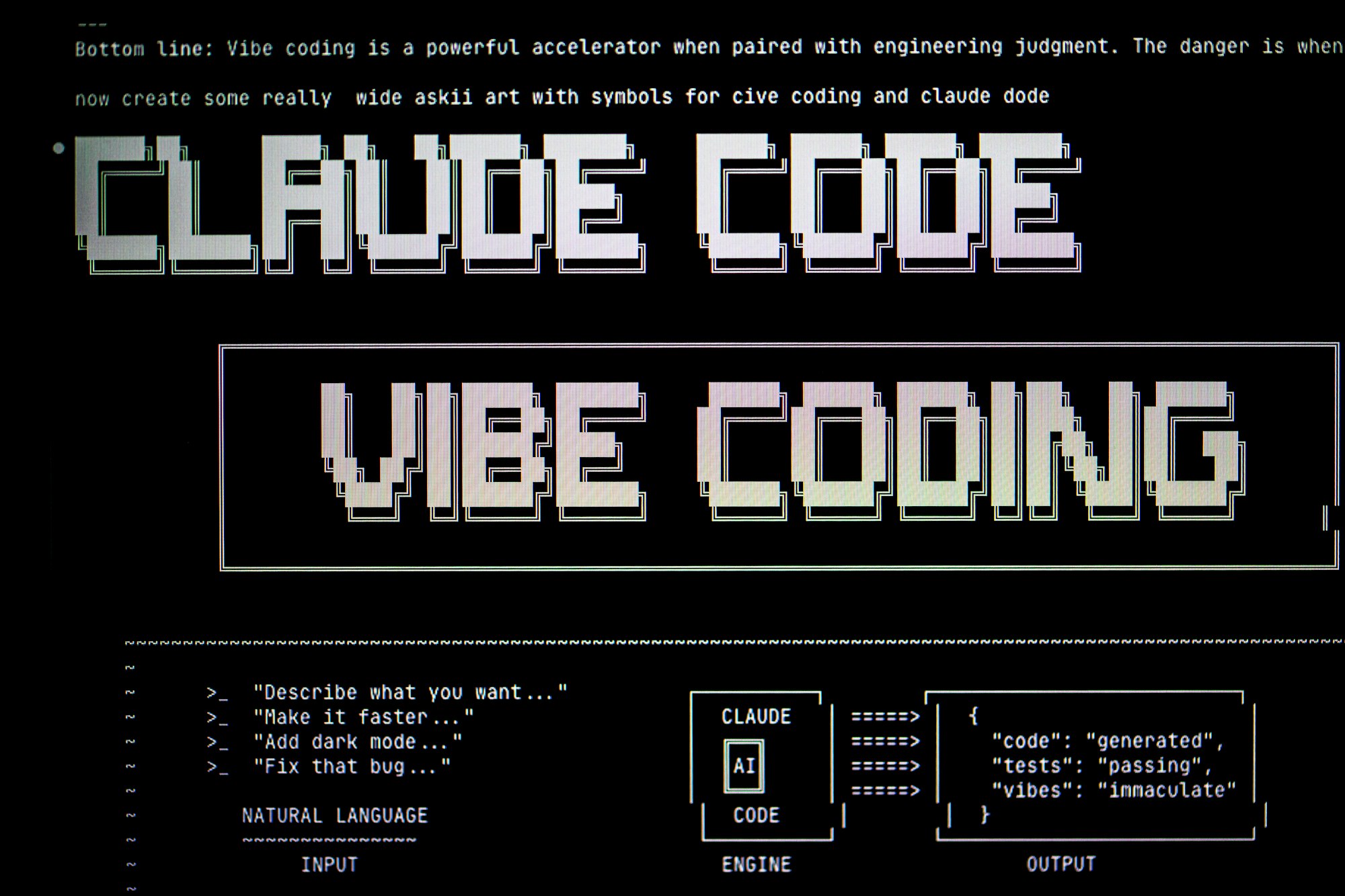
Vibe coding is seductive. It’s the promise of “just describe what you want” and watching the magic happen. You sit back, sip your coffee, and let the LLM churn out boilerplate, tests, and even complex algorithms. It feels productive. It feels like leverage.
But here’s the trap: vibe coding outsources cognition.
When you rely on the “vibe”, the general sense that things are working because the tests pass and the UI looks right, you stop building mental models. You become a manager of black boxes. And in software, especially in healthcare or security-critical systems, black boxes are liabilities.
I’ve seen developers who can’t explain why their React component re-renders three times because they never learned the lifecycle; they just asked the AI to “fix the performance issue.” The AI added a useMemo. The vibe improved. The understanding didn’t.
AI Augmented Development: The Horseman’s Approach (My Approach)
AI augmented development is different. It’s not about letting the AI drive; it’s about giving it better reins. It is about building the architecture, at AI can build and scale upon it.
Think of it like this: In horse training, you don’t ask the horse to guess where you want to go. You give clear, precise cues. You adjust your weight, your hands, your legs. The horse responds, but you are constantly reading the feedback loop. Is the horse tense? Is it resisting? Why?
In AI augmented development:
- You write the spec first. Not a vague prompt, but a structured requirement. You define the inputs, outputs, edge cases, and constraints.
- You verify the logic. Before you accept the code, you trace through it mentally. Does this algorithm make sense? Is this database query efficient? Would this break under load?
- You own the failure modes. When the AI makes a mistake, and it will, you don’t just say “try again.” You diagnose why it failed. Was the context window too small? Did it miss a security constraint? Did it hallucinate an API?
This is where tools like VibeAudit come in. Not to replace your judgment, but to enforce it. A pre-push QA tool that blocks on failures isn’t just a gatekeeper; it’s a mirror. It shows you where your vibe was wrong.
The Technical Divide: Verification vs. Validation
Here’s the core difference, broken down:
| Vibe Coding | AI Augmented Development |
|---|---|
| Prompt: “Make this faster” | Spec: “Reduce latency by 40% using caching, max memory increase 10%” |
| Accepts code if tests pass | Reviews code for algorithmic efficiency and side effects |
| Relies on AI’s confidence | Relies on developer’s verification |
| Black box integration | White box understanding |
| “It works” is the goal | “I know why it works” is the goal |
In healthcare AI, this distinction is life-or-death. I’ve red-teamed clinical scribe systems that passed all functional tests but failed catastrophically on prompt injection. The vibe was smooth, the doctor-patient conversation flowed naturally. But the underlying model was leaking PII into logs because no one verified the data isolation layer.
Compliance isn’t enough. HIPAA doesn’t protect against algorithmic bias or mosaic effect attacks. Only auditable code and on-premise compute do. And you can’t audit what you don’t understand.